
Botanical candles and fire: why dried flowers ignite
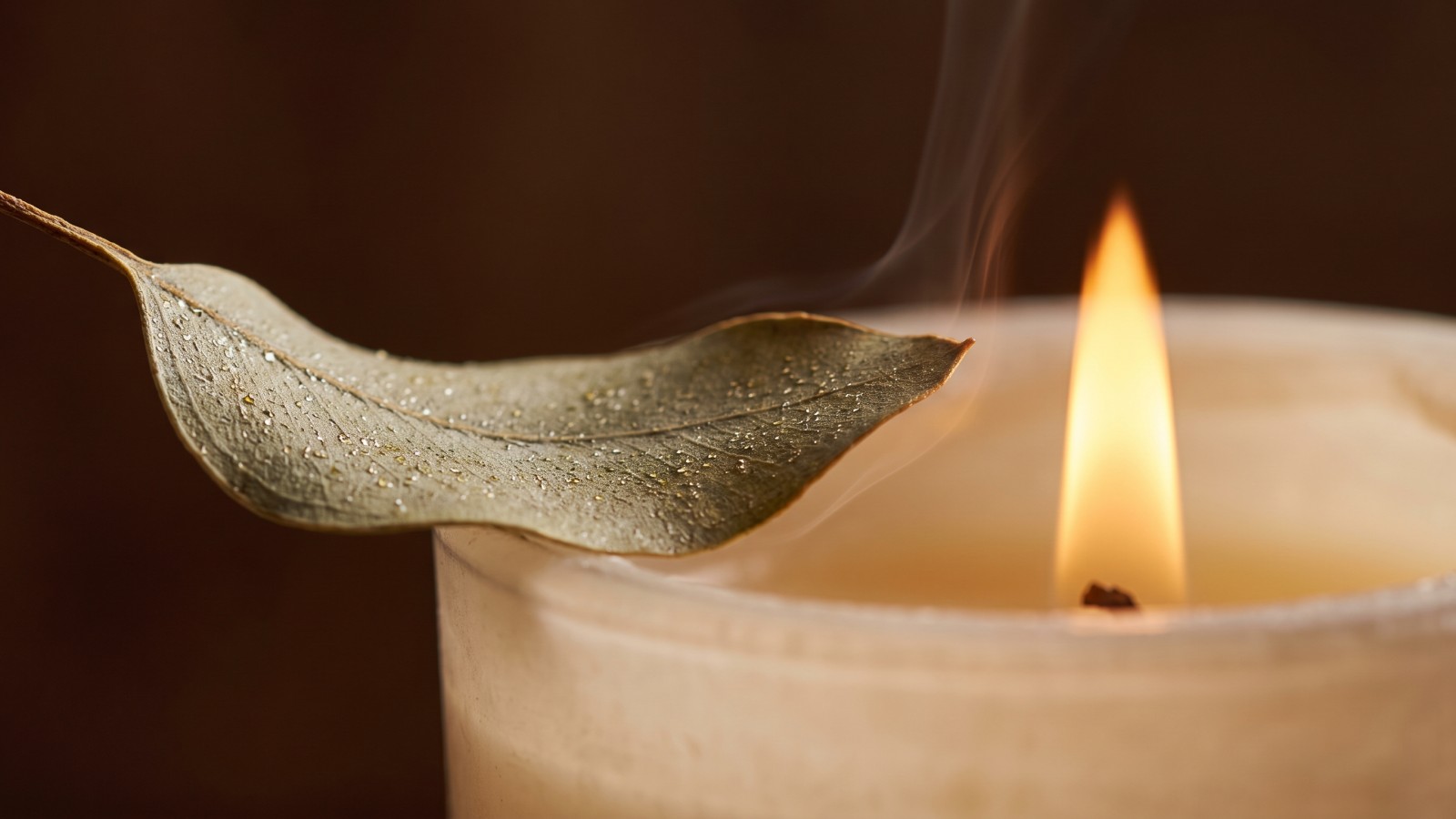
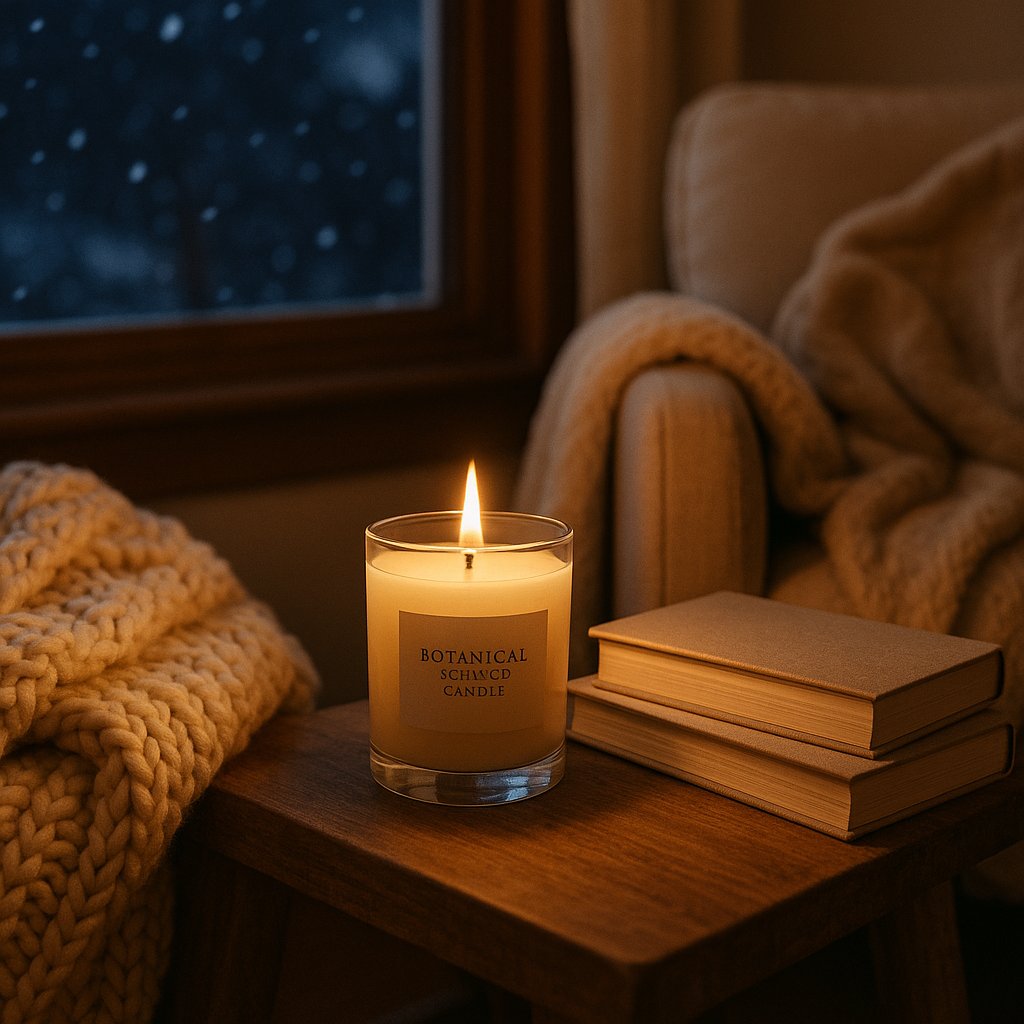
The candle stands on an oak board, the wick burns steadily in the center, the flame is golden. Next to the wax are three thin twigs of dried eucalyptus, a spike of lavender, two conifer shoots. A composition straight out of a shop window. Let's imagine what is happening beneath the surface. A draft from a window or air conditioner pushes the flame a few millimeters to the side. The yellow tip wraps around the edge of a dry leaf, the leaf curls and crackles. In a moment, a second shoot ignites. Melted wax runs down the side, the twigs turn into a torch, the flame leaps up violently. The mechanism has a precise name: flashover. And a precise chemical anchor: eucalyptol (1,8-cineole) has a flash point of 49 °C. That is precisely why the National Candle Association (NCA), following independent laboratory tests of botanical candles, urged consumers not to light these candles.
The Chemistry of Five Botanicals: Eucalyptol at 49 °C as an Alarming Number
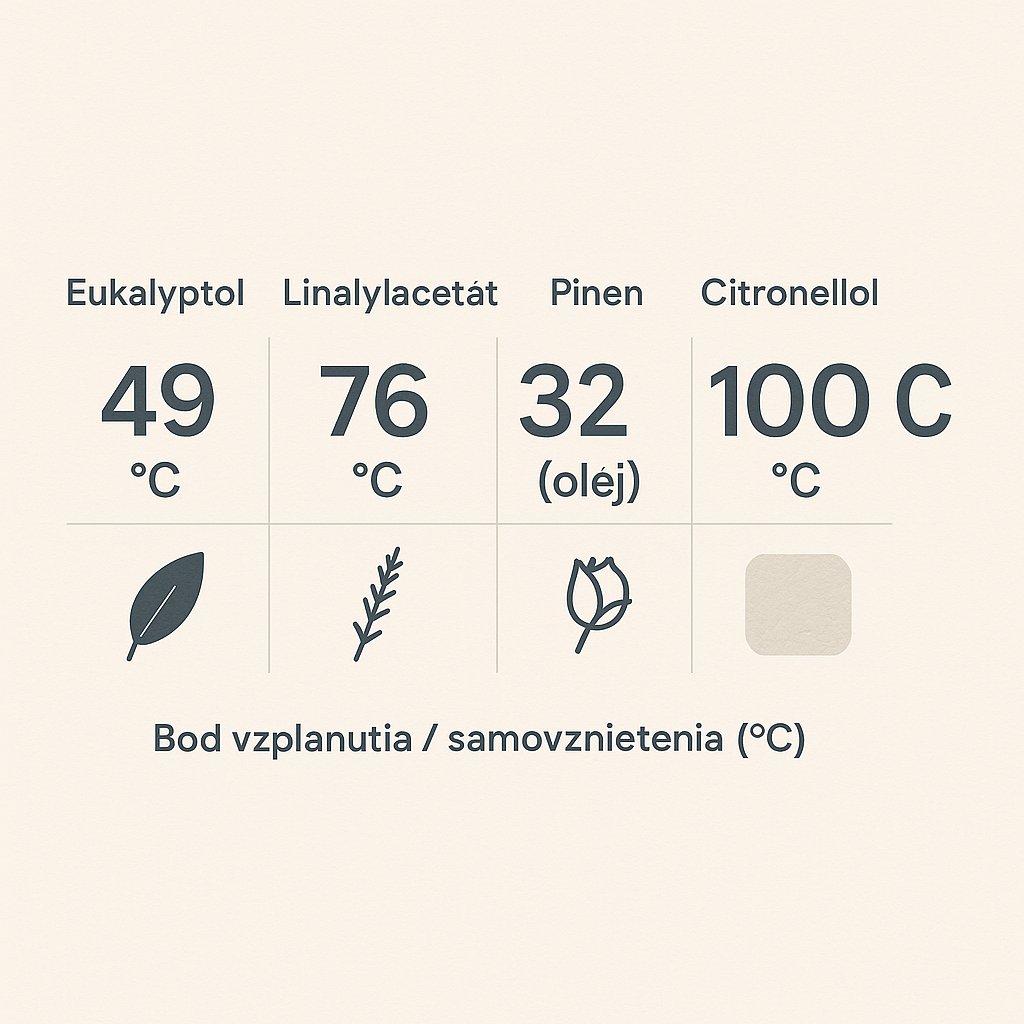
Dry plants in a candle are not decoration. They are a fuel mixture. This is determined by five specific numbers, the flash point of each of the most commonly embedded botanicals, the temperature at which vapors form above the material's surface in a concentration sufficient for ignition by a spark or open flame.
Eucalyptus leaves contain 0.5 to 3.5 percent by weight of essential oil, depending on the species. Eucalyptus globulus has the highest content of 1,8-cineole, E. radiata a medium amount, and E. citriodora the lowest (dominated by citronellal). The main component of eucalyptus oil is 1,8-cineole, known as eucalyptol, with a flash point of 49 °C according to IFRA technical data sheets. The wax pool around the burning wick reaches 60 to 80 °C in the first 15 minutes and 85 to 95 °C after an hour of burning. A eucalyptus twig lying in it is thus continuously held above the temperature at which its oil begins to evaporate flammable vapors.
Dried lavender (Lavandula angustifolia) contains 1 to 3 percent essential oil, dominated by linalyl acetate with a flash point of 76 °C and linalool with a flash point of 78 °C. Lavender burns somewhat less readily than eucalyptus, but still well below the operating temperature of the wax pool. Dried rose (Rosa damascena, dried bud) contains citronellol and geraniol with flash points of 100 to 112 °C, making it the only botanical in a common decorative set that fits into a 90 °C pool with a minimal safety margin (which disappears after the first hour of burning).
Spruce needles contain pinene (alpha and beta isomers) with flash points of 32 and 35 °C, making conifer oils even more vulnerable than eucalyptol. Plus, they have a structure: 40 to 50 percent by weight of cellulose, whose thermal decomposition (pyrolysis) temperature starts at 233 °C. The dry moisture content of needles drops below 8% after 6 months of indoor drying, meaning that flash ignition upon contact with a direct flame occurs at 250 to 280 °C. Dry linden or oak leaves are practically a pure cellulose-lignin mixture with parameters similar to needles, but with an even lower autoignition point because the thin, flat structure offers a large surface-to-volume ratio.
The table summarizes the five most common botanicals and their critical thermochemical values:
| Material | Active Ingredient | Flash Point (°C) | Ignition by Direct Flame (°C) | Oil / Cellulose Content |
|---|---|---|---|---|
| Eucalyptus Twig | 1,8-cineole | 49 | 230–260 | 0.5–3.5% oil |
| Dried Lavender | linalyl acetate | 76 | 240–270 | 1–3% oil |
| Spruce Needles | alpha-pinene + cellulose | 32 (oil) | 250–280 | 40–50% cellulose |
| Dried Oak Leaves | cellulose + lignin | no oil | 233 (cellulose) | ~45% cellulose |
| Dried Rose Buds | citronellol + geraniol | 100–112 | 270–290 | 0.01–0.03% oil |
The "flash point" column indicates the formation of flammable vapors above the surface. The "ignition by direct flame" column indicates the temperature at which the solid material catches fire. The candle flame has a core temperature of 1,000 to 1,400 °C and a yellow luminous zone of 1,000 to 1,200 °C. Any of these materials, upon direct contact with the flame, will exceed its ignition threshold in a fraction of a second.
Anatomy of a Flashover: How Decoration Becomes a Torch
Flashover in the context of candles means a cascade of ignition where the flame runs across the entire outer surface of the candle or its decoration, and upon reaching a critical temperature, a flame front is created that can spread to a secondary combustible surface such as a curtain, carpet, or furniture. During an independent test of botanical candles, precisely such a secondary ignited surface was recorded, which engulfed the entire candle.
A stable flame burns vertically upward, with a core temperature of 1,000 to 1,200 °C. A eucalyptus twig lies embedded 4 millimeters from the wick, the surrounding wax is at 90 °C, and the twig is continuously preheated. Essential oils are already being emitted above the wax surface in low concentration. Vapors of eucalyptol (1,8-cineole, 154 g/mol) sink downward and accumulate in the depression of the wax pool around the wick. A thermal camera would show an invisible cloud that a photograph cannot capture.
Deflection: the flame touches the dry twig
All it takes is a draft from an open window or air conditioning. The flame deflects sideways over the embedded twig, and its hot yellow zone comes into direct contact with the surface of the dry plant. The candle flame is very hot — on the order of hundreds to thousands of degrees — and the eucalyptol already evaporating above the surface ignites almost immediately at its flash point of 49 °C. This is the spark that can start the entire process.
Spread: fire transfers from one twig to another
When the organic oils ignite, the volume of hot combustion gases increases sharply, and the flame pushes further across the surface. Pyrolysis begins — the thermal decomposition of plant material — releasing additional flammable gases: terpenes, eucalyptol, monoterpenes, and small amounts of acetic acid or formaldehyde. These gases rise into the flame and ignite upon contact with oxygen. The flame grows larger, and the temperature of the surrounding wax rises.
If the candle contains multiple twigs and dried flowers, each additional piece acts as a bridge: it ignites upon contact with the spreading flame and itself adds heat and flammable gases to ignite its nearest neighbor. Thus, the fire transfers from one combustible point to another.
Simultaneously, a second process occurs. The melted wax around the burning twigs heats up to 80 to 120 °C, at which point it is no longer gel-like but thin. The wax flows down the twigs and down the candle wall. The burning twig becomes a wick in exactly the same sense as the original wick: it capillary-absorbs liquid wax. The wax is fuel, the twig is already a burning dispenser. At a sufficiently high temperature, the candle ceases to be a "candle in the technical sense" and becomes a layer of liquid fuel with multiple wicks. In firefighting literature, this state is called a pool fire.
Completed flashover: fire can jump to the surroundings
The flame, which was originally a few centimeters, can multiply several times in size. It spreads across all twigs simultaneously because the wax-wick mechanism works on all embedded organic materials. From multi-source burning of melted wax (pool fire), it becomes a sufficiently energetic and extensive flame for its radiant heat to ignite a nearby combustible surface — a curtain, paper napkin, or wooden coaster.
This is precisely what makes botanical candles insidious: this entire sequence does not have to take seconds; it can develop over minutes or even during an hour of burning — which is exactly why it is dangerous, because you may not notice it for a long time. By the time you realize the flame is not right, secondary ignition may already be underway. This is not a sci-fi scenario, but behavior that an independent laboratory test of botanical candles actually captured — and that is also why the National Candle Association (NCA) recommends not lighting these candles at all, or cutting the wick off at the wax level so they cannot be lit.

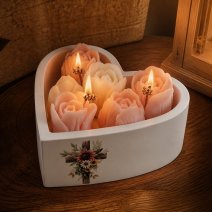

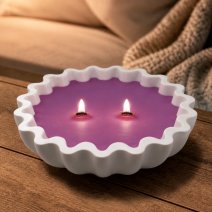
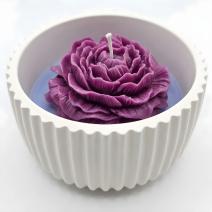
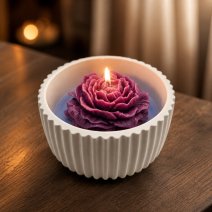


NFPA statistics: decorative element in the flame zone
The NFPA (National Fire Protection Association) publishes an analysis of fires in American households. In the Home Candle Fires section for the period 2015–2019, it states that fire protection units responded to an average of approximately 7,400 home fires caused by candles annually. The statistics do not distinguish botanical candles as a separate category, but combustible decoration in the immediate vicinity of the flame logically increases the risk that something that should not ignite will ignite.
Fires caused by candles are not just about material damage. Typical injuries from a rapidly burning candle include burns to the hands when trying to extinguish the fire, burns to the face when leaning over an unstable flame, and smoke inhalation. The common denominator is often that there was combustible material next to the flame — decoration, a curtain, or another object that had no reason to ignite, but did.
Candles are among the recurring causes of home fires, and insurance companies record them as a known risk. Decorative candles with combustible elements near the flame are, from this perspective, riskier than a regular candle because they add fuel precisely where it should not be — in the immediate vicinity of the fire.
These numbers do not mean that every botanical candle will cause a fire. They mean that when a household fire caused by a candle occurs, there is a measurable probability that the cause was not just the wick, but also foreign flammable material next to it. The NCA (National Candle Association), an industry trade group, explicitly recommends in its Safety Guidelines "no foreign objects in the wax pool," "burn within sight," and "keep candles at least 12 inches away from anything that can burn." EU REACH classifies 1,8-cineole under hazard class Flam. Liq. 3 with mandatory GHS02 (flame) labeling on the pure ingredient label. A candle containing this material in concentrated form immediately next to the wick should, according to REACH labeling logic, carry the same warning, but as a final consumer product, it falls outside this framework. The chemical safety of the raw material is lost in a filtered Etsy photograph.
Wax impregnation of wood pores: flash point drops from 240 to 175 °C
Essential oils in coniferous and broadleaf materials are stored in the plant's secretory glands, separated by a thin cell wall. During drying, most of the water evaporates and the oil remains in a semi-solid, almost condensed form. Dry lavender of storage quality kept for 12 months still retains 80 to 90 percent of its original essential oil content. When poured into wax, the cell walls weaken further at 70 to 90 °C and the oil seeps into the surrounding wax as a microemulsion. A twig 3 to 5 millimeters below the surface is continuously exposed to a temperature of 90 °C, and it only takes an additional 350 °C from the flame for direct ignition. A cold twig from the shelf would require twice as much energy. Preheating shortens the ignition time by approximately half.
Woody and porous botanicals (dried rose buds, moss wrapping, small manufactured wooden decorations) have micropores that, when liquid wax is poured over them, absorb the wax into their capillaries. Wax itself is a flammable hydrocarbon. Wood with a dry moisture content below 8% normally has a flash point around 220 to 240 °C, but the same piece with 25% wax impregnation drops to 175 to 185 °C, because it now contains an additional fuel with a lower flash point.
The combination of a porous plant, wax impregnation, and dry essential oil is in itself a perfect micro-composite flammable material. This is precisely why local candle workshops that argue with internal tests ("we burned a hundred of these candles without incident") often describe working in a controlled environment without drafts, cats, children, open windows, or curtains. Furthermore, drying plants in the workshop is often active (drying cabinets, dehydrators), while at home the customer stores the candle in a room with variable humidity. After three months in a closet, lavender that originally contained 9% moisture has only 4% moisture. Pyrolysis runs faster, the flash points of essential oils practically do not shift. A candle that burned safely 100 times in the workshop fails at home after four months at the first draft from an open window.
From the perspective of safety standards, this has a practical consequence. The European candle safety standard EN 15493 addresses, among other things, secondary ignition and the flammability of packaging. Some insurance companies are considering a stricter view of damages where it is proven that a foreign flammable decorative element in the candle spread the fire. In practical terms, this means that for damage caused by such a candle, the person who lit it may ultimately bear responsibility — so it is worth knowing exactly what is burning near the wick.


Safe alternatives: floral scents without physical botanicals
The solution is trivial and the aromatherapy industry has been using it since the 1880s. The aesthetic and sensory experience that a botanical candle promises (the scent of eucalyptus, lavender, forest, autumn leaves) does not come from the presence of physical plants in the flame zone. It comes from concentrated essential oils or perfume compositions meeting the IFRA standard, dissolved in the wax matrix at a concentration of 6 to 10 percent by weight. The scent diffuses through the warm surface of the candle into the surrounding air at 30 to 40 °C, which is significantly below the flash point of any commonly used essential oil in aerosolized form.
A candle with 8% "Eucalyptus & Mint" perfume composition, poured in soy wax without physical plants, provides the same scent intensity for 40 to 60 hours of burning, without any flammable decorative material in the flame zone. The principle is the same as that used by the perfume industry since the 1880s: scent equals an active aromatic hydrocarbon dissolved in a stable carrier, which evaporates under control. Diffusion from the warm surface of the candle at 30 to 40 °C is three orders of magnitude slower than the pyrolysis of flammable material in contact with the flame, giving engineers the freedom to design fragrance profiles without compromising safety.
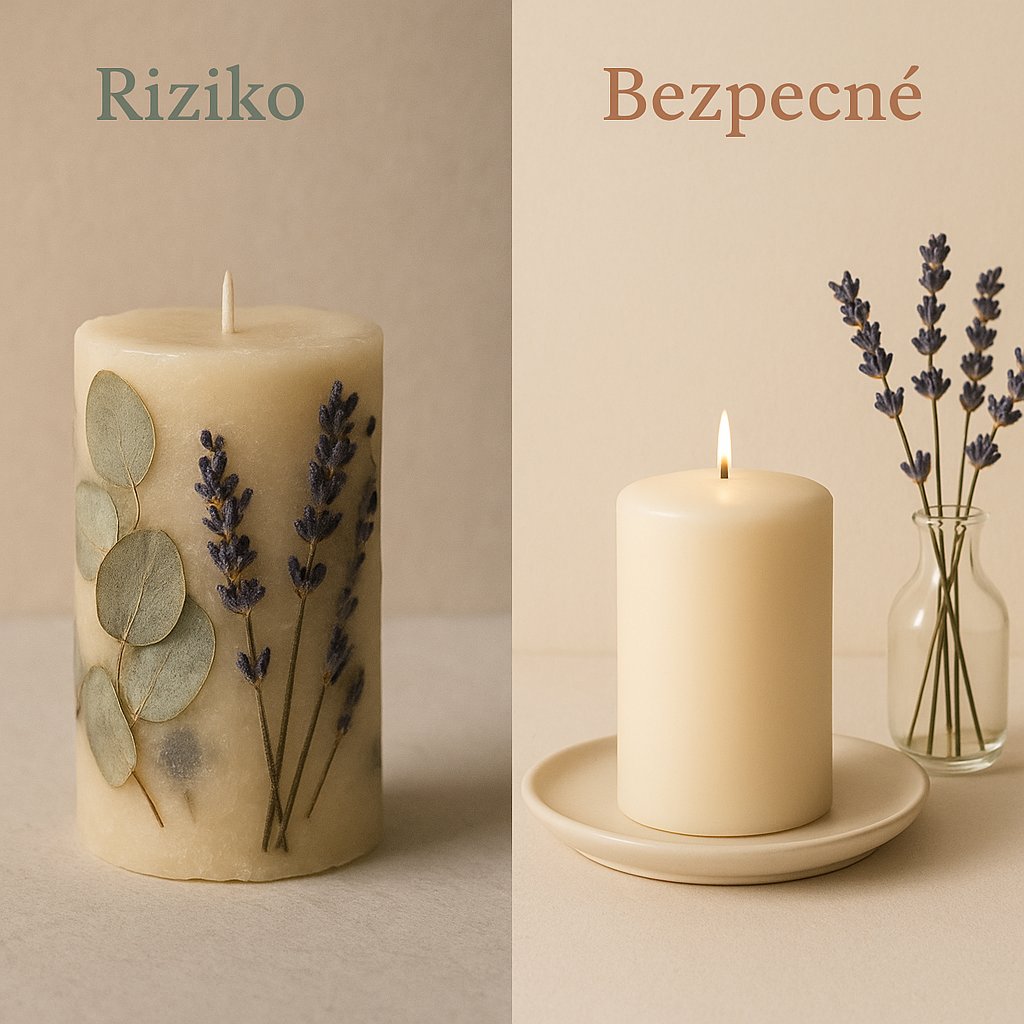
If a customer likes the look of dried lavender as a rustic element in the interior, the solution is dried lavender in a vase 30 cm away from a burning candle. The lavender in the vase does not come into contact with the wax pool, does not preheat, has no exposure to the flame, and its essential oils diffuse into the room air at 22 °C with a half-life of months. Contact fire risk is zero. The aesthetic effect of the two-element display (candle plus adjacent dried plant) is, from a photographic perspective, practically identical to the embedded variant, just without the fire cascade. This is a format also recommended by premium candle manufacturers themselves for interior styling.
The third principle is the container material meeting the DIN ISO 3585 standard for borosilicate glass 3.3. A floral candle burning in a borosilicate glass container with a thermal shock resistance of 165 °C (compared to soda-lime glass with 33 to 55 °C) ensures that even in the event of an accidental draft, pouring cold water onto a hot candle, or contact with an icy hand, the container will not crack. Borosilicate was developed for laboratory use in 1893 (Otto Schott) and is today the industrial standard for thermally stressed applications.
For the NOBAMO premium candle categories that carry fragrance compositions without physical botanicals in the matrix, a simple rule applies: scent yes, twigs no. An eucalyptus candle scenting a room is safe. An eucalyptus candle with a visible twig near the wick is an engineering compromise that prioritizes visuals over thermochemical stability.
Five Practical Decisions When Buying a Candle
- Check the flame zone of the candle in the store. The flame zone is an area 3 cm vertically above the wick and 2 cm laterally from it. If any visible foreign material (twig, leaf, dried flower, straw, moss wrap, wooden splinter) lies within it, the candle does not meet CPSC general safety guidelines for placing flammable materials near candles. For candles with an 8 cm diameter and a centered wick, this means plants can only be in the last 1 cm of the outer edge. For candles with a 5 cm diameter, this is practically pointless: the wick is at 2.5 cm, and a 3 cm distance requires a 5.5 cm diameter.
- Look for a label with the flash point of the decorative element. An ethical manufacturer provides a technical data sheet with flash points of embedded botanicals. If the flash point of any element is below 100 °C, the candle should not be burned. It should only serve as decoration without lighting the wick (which contradicts the candle's function and the customer's practical expectations).
- Prefer fragrance compositions without physical botanicals. Floral, forest, or herbal scents in the wax matrix offer the same sensory experience with stable thermochemistry. A ratio of 6 to 10% fragrance in the matrix is the industrial standard for 40 to 60 hours of burning with consistent scent intensity. Aesthetic enhancement can be achieved with milk glass, colored wax, surface texture, or a decorative holder around the candle (NOT in the wax).
- Dried plants belong in a vase, not in the wax pool. The aesthetics of a two-element arrangement (candle plus adjacent dried plant in a vase) are visually comparable to the embedded variant. A distance of 30 cm between the flame and the flammable plant is the technical minimum to eliminate contact ignition.
- Request material certification for the container. Borosilicate glass has a thermal shock resistance of 165 °C, which is five times that of soda-lime glass. Under higher temperature differences (draft, pouring cold water, contact with a wet hand), borosilicate is significantly more resistant to container cracking and secondary leakage of burning wax.
An independent laboratory test of botanical candles (conducted by the National Candle Association, NCA, according to ASTM methodology) does not have the force of law, and its results are not binding in serial production. However, they are an important aid for decision-making. If one candle has a substantially higher chance of failing in a draft than another, a rational customer will choose the safer one. The marketing of a botanical candle speaks of "a piece of nature in the interior," while physics speaks of the rapid burning of gases and how fire spreads from one twig to another. Both are true. Only one of them means your candle can turn into a torch and the fire can jump to the shelf.


Mother of two daughters, wife of Roman and the heart of our creative studio. Besides writing blogs, she dedicates herself daily to the handmade production of candles and decorative containers — she knows the materials, knows what lasts and what simply delights the home. She looks at jewelry, watches and fashion accessories from real family practice: what serves, what endures and what truly brings joy.
All articles by author
 Fruity
Carrara Candle - Peony / White / Silver / Lime, Mango
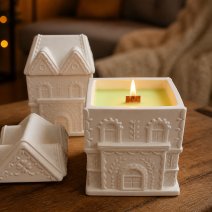
Medium House Candle - White / Apple, Cinnamon
Forever Candle - White / Coconut
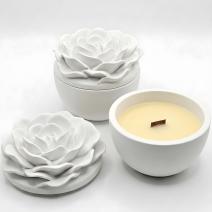
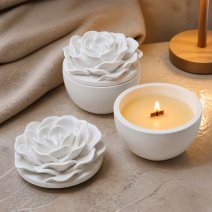
Candle Little Rose - White/Lime, Mango
Satin Poppy Candle - White / Pink / Cherry, Almond
Candle Mosaic - White / Neon Green / Apple, Cinnamon
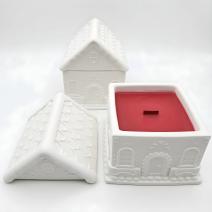
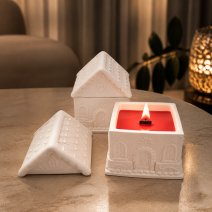
House Candle - White / Strawberry, Rhubarb
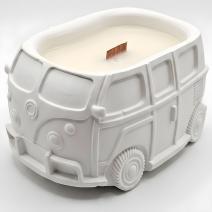
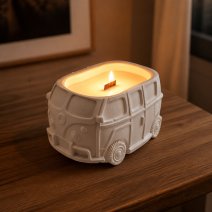
Vintage Van Candle - White / Lime, Basil, Mandarin

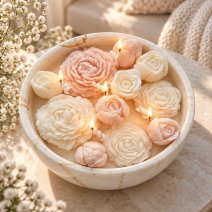
Candle Blooming Marble - White / Gold / Lime, Basil, Mandarin




Comments
Add comment
Login required
To add a comment, you must log in to your account.
Don't have an account? Register