
Greenwashing of candles — what does Botanical, Eco, Natural mean?
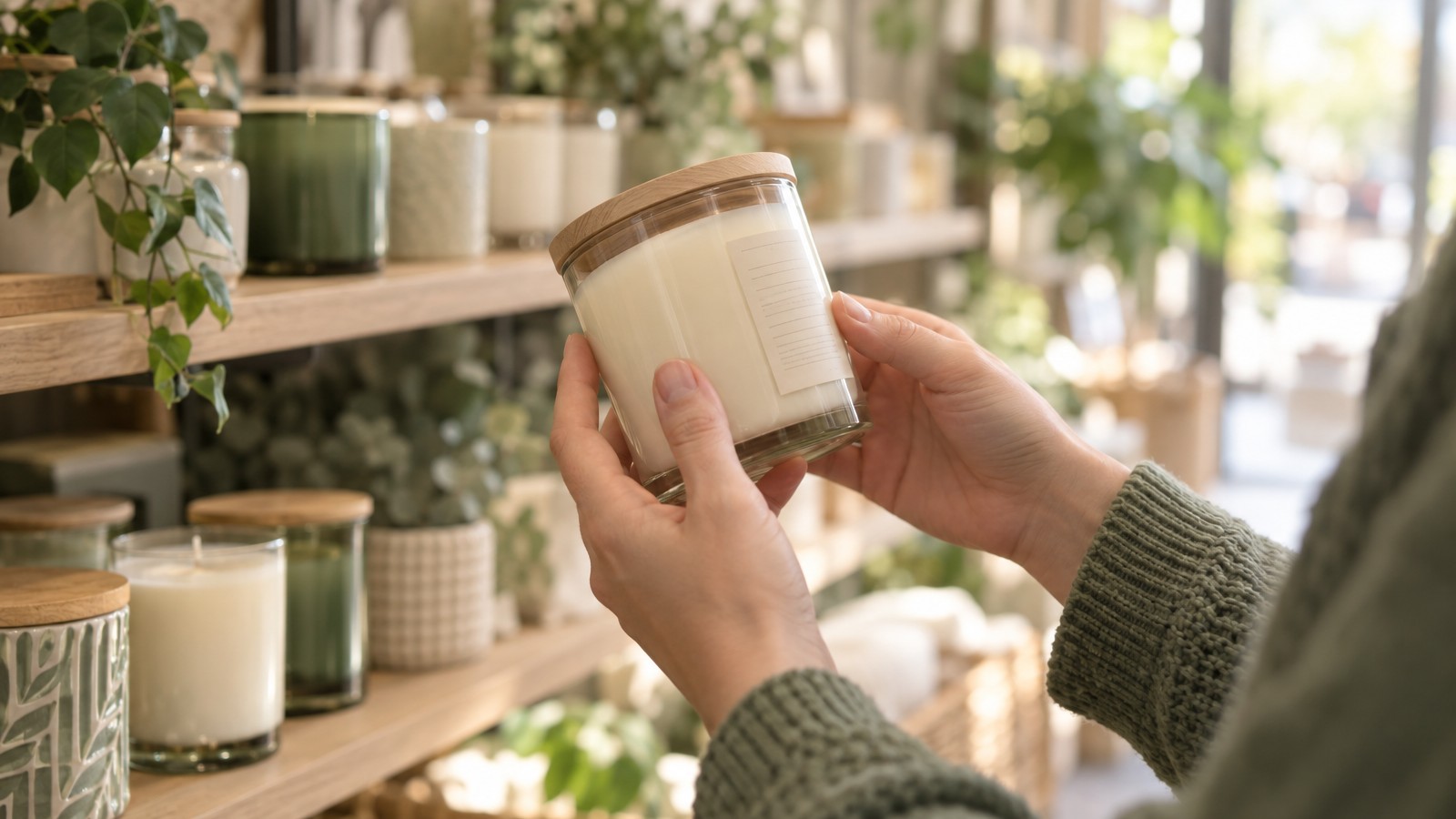
On a drugstore shelf, there is a candle labeled "Botanical & Eco — natural fragrance." Price: €1.79. Two shelves over, in a boutique studio a street higher up, a similarly looking glass candle costs €18. Both look similar. Both promise "natural" ingredients. The price difference is tenfold. The question most consumers don't ask is: why? And since "Botanical," "Eco," and "Natural" are not legally protected terms in the European Union, you won't find the answer on the label. Terms like "Eco," "Green," "Natural," and "Biodegradable" were identified by the European Commission in May 2024 as vague environmental claims without measurable criteria. This guide breaks down the origin of eco-labeling, its current devaluation, the economic anatomy of a price from €1.79 to €18, and five mistakes the average buyer makes when choosing a "sustainable" candle.
A Brief History of "Botanical": How a Niche Market Became a Marketing Reflex
The term "botanical candle" first appeared in the English-speaking world around 1990 in California natural food stores. It was tied to a specific group of artisan manufacturers who used soy wax (then a new alternative to paraffin) and essential oils from plants grown on small plantations. The price of such a candle in US dollars around 1992 ranged between $14 and $22 for a 200-gram jar. It was an expensive, niche product.
The demographic group that bought it received the acronym LOHAS (Lifestyles of Health and Sustainability) in marketing research. A study by the Natural Marketing Institute from 2002 and 2004 estimated the American LOHAS market at $226 billion annually. Large consumer goods manufacturers saw the number and began buying or copying small natural brands. The term "botanical" moved from the artisan workshop to the lid of a mass-produced candle.
In Europe, the same movement followed with a five-year lag. Around 2005, "Botanical" first appeared on drugstore shelves in Germany and the Benelux countries. By 2015, every mass-market candle line had at least one product with such a description. And today, in the mid-2020s, the term is so common that it has lost its informational value. Only the marketing reflex remains.
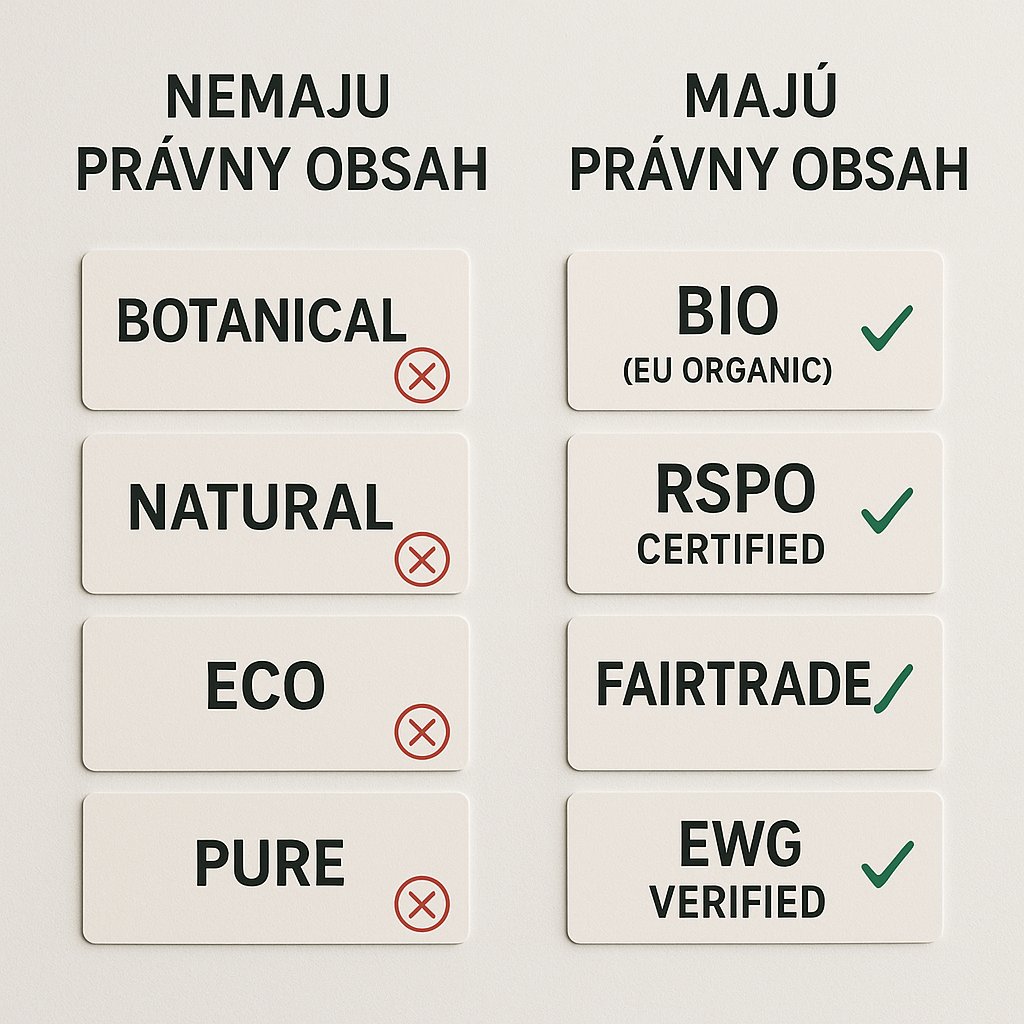
Alongside "Botanical," "Eco," "Natural," "Pure," and "Green" also appeared on shelves. None of these terms have a legal definition in the EU. Any manufacturer can put any of these words on a label without meeting a single technical criterion. The consumer sees a word that evokes trust. The manufacturer sees a word that increases conversion by 8 to 14 percent (internal estimates from Eurobarometer 2024 marketing studies on environmental claims).
Four Words That Don't Bind the Manufacturer to Anything in the EU
In February 2024, the European Union adopted a directive on empowering consumers for the green transition (Directive 2024/825, effective from March 2024), which amends rules against unfair commercial practices and explicitly classifies generic environmental claims without substantiation as misleading practices. This concerns words like "eco," "green," "natural," and "biodegradable" used as standalone labels without further context. A candle labeled "Eco-friendly candle" without a certificate, percentage of plant-based ingredients, or a verified test has no right to such a claim under this regulation. The deadline for national transposition (including Slovakia) is March 27, 2026, and the rules will start applying from September 27, 2026. The proposed Green Claims Directive (proposal 2023/0085 COD), which was supposed to require prior verification of environmental claims, was suspended in June 2025 — the Commission announced its intention to withdraw the proposal and final trilogue negotiations were cancelled; the proposal has not been formally withdrawn but remains in limbo, so it cannot currently be considered as valid law.
Until then, the legal situation is inconsistent. Consumers encounter these four words on candle labels in drugstores and hypermarket chains every day, but supervisory authorities (in Slovakia the Slovak Trade Inspection, in the Czech Republic the Czech Trade Inspection, in Germany the Wettbewerbszentrale) have limited options for enforcement until a clear criterion exists.
"Botanical": A Word Without a Threshold
The term "Botanical" became established in candle marketing around 2015 as a synonym for plant origin. Neither Slovak nor European legislation defines a minimum percentage of botanical ingredients that a manufacturer must adhere to. A manufacturer can add 0.1% lavender essential oil to 99.9% paraffin wax and legally use the "Botanical" label. Reviewers from the European Candle Association (ECA) repeatedly point out that the vast majority of drugstore candles with this label have a plant-based component only in the fragrance component, not in the wax.
"Natural": No Standard, No Audit
The English word "natural" is regulated for cosmetics in the EU through ISO 16128-1:2016 and ISO 16128-2:2017, but this standard does not apply to candles. Candles fall under legislation for household products and general safety (EU Directive 2001/95/EC), where "natural" is not a defined term. A manufacturer using petroleum-based paraffin can label a candle "Natural fragrance" simply because the scented components come from plant distillation, even though the base wax is a pure petrochemical product.
"Eco" and "Eco-friendly": Without a Certificate
No European body grants an "Eco-friendly" certificate for candles as a category. Independent eco-labels exist (EU Ecolabel via Decision 2014/391/EU with revisions in 2023), but they are not issued for candles. Other labels (Nordic Swan, Blauer Engel) focus on cleaning products and building materials; candles are either marginally included or not at all in their scope. The word "Eco" on a candle label therefore only means that the manufacturer wrote it themselves.
"Pure": The Weakest Category
The word "Pure" functions in perfumery terminology for some classifications of essential oils (pure essential oil = undiluted single-source oil), but in candle marketing it is used more generically. For a candle, "Pure" means nothing. It could be 100% paraffin, a 50:50 blend, or even coconut wax. Without further specification, it is a decorative word on the label.
What has real legal content in the EU
In contrast to the four aforementioned loosely used terms, there is a set of labels that have real criteria, audits, and penalties for misuse. For candles, they mainly concern three areas: organic origin of raw materials, sustainability of palm oil, and transparency of allergens.
"Bio" and "Organic": EU Regulation 848/2018
Regulation (EU) 2018/848 of the European Parliament and of the Council on organic production sets a minimum of 95% organically grown ingredients for using the "EU Organic" logo (green leaf with stars). A candle labeled "Bio" or "Organic" in the EU must meet these criteria for the agricultural component (especially soybean or vegetable wax) and is subject to an annual audit by a certification body. The logo includes the certifier's code in the format "SK-BIO-XXX" (Slovakia) or "DE-ÖKO-XXX" (Germany). Without this code on the label, the claim is not valid.
RSPO certified: Round Table on Sustainable Palm Oil
RSPO (Roundtable on Sustainable Palm Oil) is a sector certification for sustainable palm oil and its derivatives, including palm wax. According to the RSPO Annual Communications of Progress 2024, certified sources account for approximately 19% of global palm oil production, meaning 81% of palm oil entering the world market is not RSPO certified. A candle with palm wax without the RSPO logo most likely comes from a non-certified plantation.
Fairtrade and EWG Verified
The Fairtrade International label (blue logo with a person) is rarely seen on candles, but some manufacturers use it for soybean or coconut wax. It guarantees a minimum price for the grower and a social premium for the community. EWG Verified (Environmental Working Group, US origin) evaluates chemical safety and transparency; it is less common in the EU but is growing.

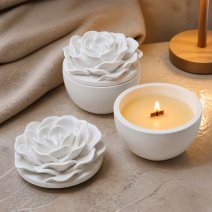
Palm oil in candles: under what names it hides
Palm oil is an attractive raw material for the candle industry for two reasons: price (3 to 5 times cheaper than coconut or soybean wax with comparable burning quality) and a high melting point, which allows it to be added to other waxes as a hardening component. Drugstore candles with "vegetable wax" content contain a palm component in 60 to 75% of cases, according to various industry audits from 2023 and 2024.
Six pseudonyms for palm oil on the label
Manufacturers do not like using the word "palm" on the label because the association with deforestation in Indonesia and Malaysia is strong among consumers. Instead, they use technically correct but less recognizable names:
- Hydrogenated palm oil: chemically modified palm oil with a higher melting point, standard for waxes.
- Palm wax: direct designation, but less common among marketing-oriented manufacturers.
- Vegetable wax without further specification: the most frequent code for a palm component in drugstores.
- Stearic acid: can come from palm, coconut, or animal tallow. Without specifying the source, it is approximately 70% likely to be palm-based.
- Cetyl palmitate and glyceryl monostearate: emulsifiers of palm origin in the vast majority of cases.
- Sodium palmate or palmitate: salt of palmitic acid, almost always palm-based.
If you read any of these terms on the label without an accompanying RSPO logo, the candle contains non-certified palm oil. For a candle costing 1.50 to 2 euros, RSPO certification is economically unrealistic. The costs of auditing and chain-of-custody increase the raw material input price by 8 to 14%, which low-cost retail cannot absorb without raising the final price.
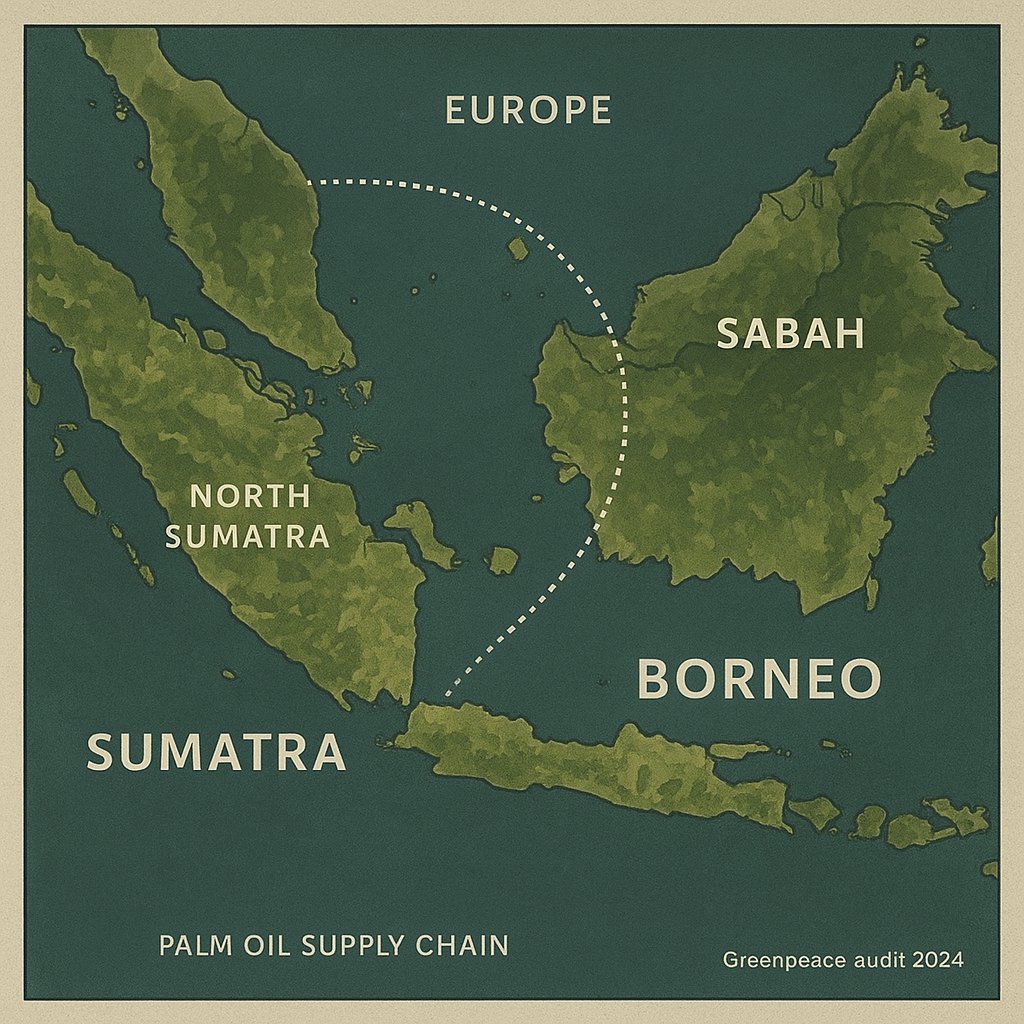
Greenpeace 2024 and three RSPO chain-of-custody models
Greenpeace International, in its report "Final Countdown: Now or Never to Reform the Palm Oil Industry" (2024 update), tracked twelve major palm oil suppliers for the European market. The audit found that for eight out of the twelve, there were documented cases of violations of the RSPO Principles & Criteria 2018 in 2022 and 2023. The most common violations included clearing primary forest in Sumatra and Borneo (Indonesia), violating the labor rights of migrant workers, and illegal palm plantations in the Tesso Nilo and Leuser Ecosystem reserves.
Indonesia produces 58% and Malaysia 26% of global palm oil (FAO Trade Statistics 2023). The main growing areas are also the habitat of the Sumatran orangutan, Sumatran rhinoceros, and Sumatran elephant (all critically endangered, IUCN Red List). Since 2001, Indonesia has lost 28.4 million hectares of tree cover according to Global Forest Watch, an area more than five times the size of Slovakia. Part of this deforestation is directly linked to the expansion of palm plantations.
Three RSPO chain-of-custody models
Even within RSPO certification, there are three different ways palm oil is tracked from plantation to final product, each with a different level of credibility. The strictest model, Identity Preserved (IP), means that palm oil from a specific certified plantation is kept separate throughout the entire supply chain. A candle labeled "RSPO IP" physically contains the same oil produced by the audited farm. The intermediate model, Segregated (SG), allows mixing from multiple certified plantations but maintains separation from non-certified sources. The weakest model, Mass Balance (MB), is purely an accounting method: the manufacturer can mix certified and non-certified palm wax as long as the ratio is balanced in their accounting records. The vast majority of candles with the RSPO logo in European drugstores carry the Mass Balance variant (the cheapest certification scheme). This is not a deception, but it offers a weaker guarantee than what a consumer might imagine when seeing the RSPO logo.
Anatomy of the price: drugstore €1.79 vs boutique €18
The tenfold price difference between a drugstore candle and a boutique candle looks like an absurd markup. However, when you break down the individual cost items, you'll find the difference adds up. The question remains which part of the price you are willing to pay for.
Model calculation for a 200-gram glass candle. The figures are aggregated from open sources, annual reports of major EU wax producers, and financial statements of boutique workshops required to publish data in the commercial register.
Drugstore candle at a price of €1.79
The retail price of €1.79 includes 20% VAT. Without VAT, it's €1.49. The chain's margin in the drugstore segment is typically 35 to 45 percent. With a 40% margin, the retailer pays the manufacturer €0.89 per piece. From this, the manufacturer must cover the entire chain:
- Wax (120 g): €0.08 to €0.14. Reality: a blend of paraffin (~€0.80/kg) and hydrogenated palm oil (~€1.20/kg) with a 5 to 10 percent addition of soy for marketing claims.
- Scent (5 g): €0.02. Synthetic fragrance composition (200 to 400 aromatic components, price €12 to €25/kg).
- Wick: €0.01. Asian cotton, sometimes with a metal core (zinc).
- Packaging and glass: €0.18 to €0.24. Mass-produced glass (China, Turkey), thin wall, serial print.
- Label, packaging material, and transport: €0.09.
- Manufacturer's labor and overhead at 50,000 pcs/day: €0.18.
- Manufacturer's margin (15%): €0.13.
Total: €0.73 to €0.86. The consumer receives a functional product that burns for 25 to 35 hours and spreads scent over 8 m².
Boutique candle at a price of €18
Retail price of €18 excluding VAT = €15. Boutiques typically sell directly (e-shop or own physical store), so the margin is higher, but so are the costs. After deducting the payment gateway, shipping to the customer, and own marketing overhead, the manufacturer is left with between €7 and €9:
- Wax (150 g, soy or coconut EU): €0.80 to €1.10.
- Scent (8 g, in line with the IFRA standard, 30 to 70 percent natural components): €0.40 to €1.10. For a quality composition, the price is €60 to €200/kg.
- Wick (European cotton): €0.12.
- Packaging and glass (EU production, thicker wall, hand-printed): €1.80 to €2.50.
- Label: €0.40.
- Labor (handmade, 8 to 14 steps, 200 pcs/day with two workers): €1.80 to €2.40.
- Certificates and tests (EN 15493, IFRA standard compliance): €0.15 to €0.30 amortized.
- Marketing, e-shop, delivery: €1.50 to €2.00.
Total variable costs: €7 to €10. The consumer receives a product that burns for 45 to 60 hours, spreads scent over 15 to 20 m², and has a verifiable origin for every ingredient.
So, the tenfold price difference buys: three times the lifespan, twice the scent throw, and verifiable origin. When dividing the price by "filled m²-hour" (m² of living space × hours of burning), the expensive candle is approximately 110% more expensive than the cheap one, not 900%. When dividing the price only by the hour of burning (without considering the scent volume), the expensive candle costs 4.5 times more.
Synthetic vs natural fragrances: price and chemical difference
The scent in a candle is usually 5 to 10% of the weight, but it determines 70% of customer satisfaction (industry surveys by ECA, IFRA). The drugstore segment and the artisan segment use two different categories of fragrance ingredients, and the price difference is 4 to 8 times.
Synthetic fragrances: €15 to €25 per kilogram. Fragrance compositions are assembled in perfumery laboratories by combining dozens of individual aromatic chemical compounds. For a €1.50 candle, this is the only economically feasible choice. An average synthetic composition contains 200 to 400 individual aromatic compounds, most of which do not have an individually verified safety profile. Only the final blended effect is tested.
Natural fragrances: €60 to €200 per kilogram. Essential oils extracted by steam or cold distillation from plants. Some single-source extracts (Damask rose, jasmine absolute, sandalwood) exceed €1000/kg. A candle with 7% natural fragrance therefore contains raw material costing €4 to €14 per kilogram of wax, which for a 200g candle represents €0.80 to €2.80 just for the scent. A drugstore candle priced the same as the raw material of a natural fragrance cannot contain this category.
IFRA (International Fragrance Association) and RIFM (Research Institute for Fragrance Materials) set safety limits. The current IFRA Standards 51st amendment (2024) regulates more than 220 individual substances with specific limits for category 12 (Candles and air-care products). A candle whose manufacturer states the fragrance's compliance with the IFRA standard with a specific code (e.g., "IFRA-compliant, batch ref XX-YY") carries a verifiable claim. Without a code, the claim is unverifiable.
Five things on the label to actually look for
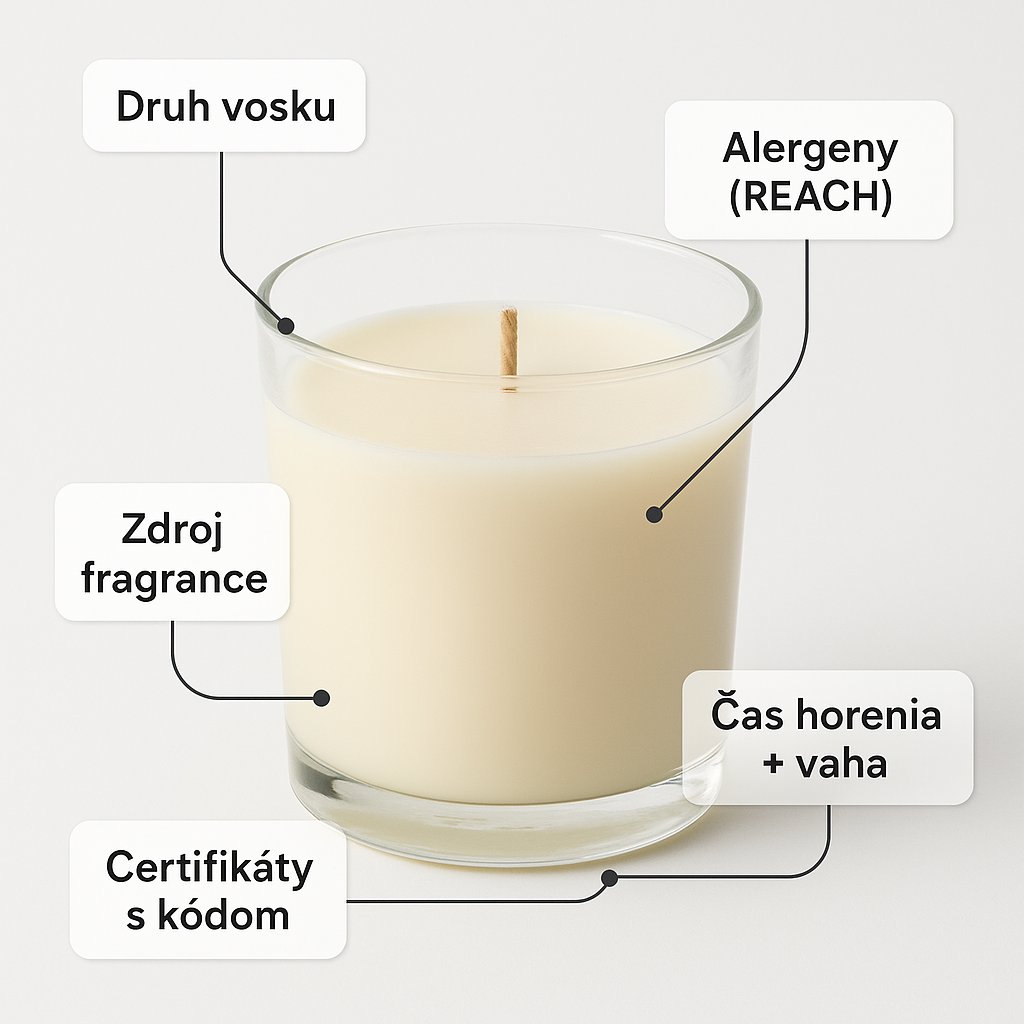
Beyond marketing words, a mass-produced candle can be distinguished from an artisanal one in five specific points. None of them are on the front of the label; all are in the fine print on the back or side:
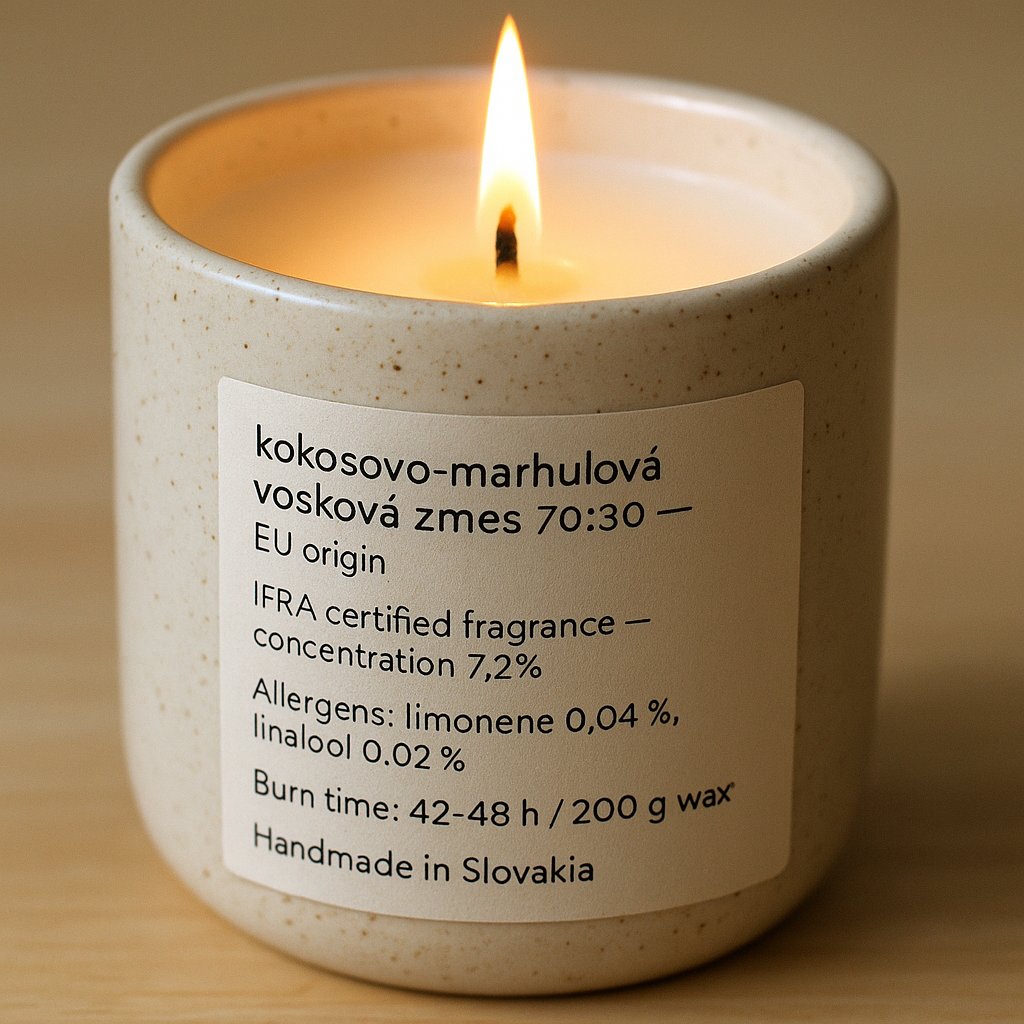
- Specific type of wax, not generic "vegetable wax". Look for precise labeling: "100% soy wax from USA", "rapeseed wax, origin EU", "coconut-apricot blend 70:30", "RSPO certified palm wax, Mass Balance". Without this specification, the wax is a drugstore blend, highly likely paraffin-palm based.
- Specific source of fragrance, not just "fragrance" or "parfum". Look for: "essential oil grade, IFRA compliant", "natural fragrance, INCI list", specific single-source extracts ("lavandula angustifolia, France", "citrus aurantium dulcis, Sicily").
- Declaration of allergens in fragrance ingredients. Note: Regulation (EU) 2023/1545, which expanded the list of mandatory allergenic fragrance substances to 80 and set a threshold of 0.001% for products that remain on the skin, is a cosmetic regulation (amending 1223/2009) — it does not directly apply to candles. Candles are not legally subject to this labeling. However, if a manufacturer nevertheless lists something like "contains: limonene, linalool, citral, geraniol, eugenol", it is a voluntary signal of transparency and seriousness. Its absence on a candle is therefore not a violation, but its presence is a plus.
- Burn time including wax weight. Look for specific values: "200g soy wax, burn time 40 to 50 hours". Without this data, you cannot compare efficiency. A drugstore candle of 100g with a declared "up to 30 hours" burn time typically has a real burn time of 18 to 22 hours in practical use.
- Certificates with a specific number or code. Look for: "RSPO-MB-XXXX", "EU Organic SK-BIO-002", "IFRA 51st Amendment compliant batch YYY", "EWG Verified". A logo without a code is decoration; a certificate is always numerical.










Five most common consumer mistakes when choosing an "eco" candle
A view from the other side. Five mistakes we regularly observe in customers who come asking why their "natural" candle burns briefly and after half an hour the room smells like a synthetic perfume bomb:
Mistake 1. Believing words without a certificate
"Botanical", "Natural", "Eco", "Pure", "Green", "Organic-inspired": none of these words have legal content in the EU unless followed by a certification logo. "Organic-inspired" is a particularly cynical term because it borrows authority from the actual EU Organic logo but does not claim it. A quick mental check: cover all words without a certification logo. If nothing remains on the label except the brand and scent description, the candle has no ecological guarantee.
Mistake 2. Looking only at the front of the label
The large side of the label with the inscription "100% Natural Fragrance" is marketing. The small side with the ingredient list is technical content. Turn the candle over. If you see "paraffin wax", "petroleum wax", "mineral wax" in the composition, the candle has a paraffin base (fossil origin). If you see "palm wax", "vegetable wax", "hydrogenated palm oil" without RSPO specification, it is likely non-certified palm oil.
Mistake 3. Not considering burn time in the price calculation
A drugstore candle for €1.79 with a declared burn time of 25 hours. A boutique candle for €18 with a burn time of 55 hours. Price per hour of burning: €0.072 versus €0.327. The factor decreased from 10 to 4.5. The second factor: effective scent throw. The drugstore candle spreads scent over 8 m², the boutique over 15 to 20 m². Price per "filled m²-hour": €0.009 versus €0.019. The factor decreased from 10 to 2. When accounting for real performance, the difference between a drugstore and a boutique candle is not a factor of 10, but a factor of 2 to 3.
Mistake 4. Ignoring hidden names for palm oil
The word "palm" on labels of consumer products in the European Union has gradually worsened. The industry's response was predictable: instead of product reformulation came name reformulation. "Hydrogenated palm oil", "elaeis guineensis oil" (botanical name of the oil palm), "palm kernel oil", "palmitic acid", "sodium palm kernelate". All are derivatives of palm oil. The most deceptive name is "vegetable wax" — without specifying the specific plant, in 60 to 80 percent of cases it is palm-based wax.
Mistake 5. Believing claims of "100% natural fragrance"
Essential oils for candles cost between €60 and €200 per kilogram. A synthetic fragrance composition costs between €12 and €25 per kilogram. For a drugstore candle with a total retail price of €1.79, there is simply no mathematical room for essential oil. The word "natural" on such a candle is false or misleading. Detection: smell the candle cold (without burning). An essential oil has a softer, multi-layered scent that reveals itself slowly. A synthetic fragrance has an intense but flat scent that hits immediately and, after a few seconds, transitions into a chemical aftertaste.
An inside look: why mass production needs palm wax
Why don't mass producers simply switch to soy or coconut wax? The answer lies in business mathematics.
A mass-produced candle series aims to produce 30,000 to 100,000 units per month for a single product. The wax supply for this volume must be continuously available, have a consistent technical specification (melting point, contraction upon cooling, compatibility with dyes and fragrances), and must cost below approximately €1.80 per kilogram. At a higher price, the entire calculation for the €1.79 shelf price falls apart.
Global palm oil production is 78 million tons per year. Global soybean oil production is 60 million tons (of which only a small portion goes into wax). Global coconut oil production is 3.7 million tons (its price is 3 to 4 times higher than palm oil). Rapeseed oil accounts for EU production of around 22 million tons, but a large part goes into biofuels and the food market.
From the perspective of continuous availability, palm oil is the only wax that easily meets both criteria: price and volume. Soy wax in the EU requires imports (the EU grows only a small amount of soy), coconut wax is expensive and has seasonal fluctuations, and rapeseed wax has technical limitations (higher melting point, more difficult formulation with fragrances). Beeswax is expensive and has ethical issues with large-scale farming.
Mass production, therefore, does not need palm oil because of evil. It needs it because of mathematics. The drugstore price of €1.79 and a wax other than palm-based do not meet in mathematics. This does not mean that drugstore candles are bad or dangerous. Tests by Petra et al. 2014 (Regulatory Toxicology and Pharmacology, vol. 69, pp. 55 to 70) showed that paraffin candles, under normal use, do not pose a known health risk. It only means that the ecological claims on them are often marketing, not technical.
Why NOBAMO does not use "Botanical" or "Eco" labeling
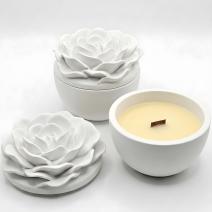
In the Slovak workshop NOBAMO, candles are made with a recipe based on a coconut-apricot blend (proprietary ratio), European wicks, and EU fragrances. The candles are poured into hand-cast ceramic vessels, and each undergoes manual inspection before shipping. None of these details are as marketing-attractive as the word "Botanical".
The decision not to use "Eco" or "Natural" on the label stems from three reasons that intersect with the arguments of this guide. The first reason is legislative: after September 2026, standalone generic environmental claims without a measurable criterion will be legally challengeable in the EU. The second reason is ethical: claiming "Natural" for a wax that is not technically 100% plant-based (the coconut-apricot blend contains a small additive to improve burning) would be misleading to the consumer. The third reason is commercial: a customer who buys a handcrafted candle for €22 or €28 does not believe marketing words. They believe the specific data on the label and the sensory impression during burning.
Experience has shown that consumers perceive generic environmental claims as a marketing gesture without substance. Therefore, communication sticks to details: the fragrance fills a 12 m² room within 8 minutes, the flame is even and yellow with a golden edge without a smoke trail, the scent lingers in textiles for several hours after extinguishing. These descriptions are verifiable. The word "Eco" is not verifiable.
Checklist for your next candle purchase
When deciding in front of a shelf or in an e-shop, go through these questions step by step. The more positive answers, the lower the chance of greenwashing:
- Is the specific type of wax (soy, coconut, rapeseed) listed on the label with a percentage or origin?
- Is the fragrance specified as "essential oil" or with an INCI code, or with reference to the IFRA standard?
- Does the manufacturer voluntarily list fragrance allergens (limonene, linalool, citral, etc.)? This is not legally required for candles, but it is a sign of transparency.
- Is the wax weight and burn time declared as a specific number (not "up to X hours")?
- Is the certificate (RSPO, EU Organic, EWG) accompanied by a numerical code, not just a logo?
If the answer to 4 or 5 of these questions is positive, it is a candle where the manufacturer provides the consumer with measurable information. If the answer is positive for 0 to 2, the words "Botanical", "Pure", and "Eco" on the front are very likely standalone marketing decorations without substance.
Directive 2024/825 (empowering consumers for the green transition) changes the rules from September 2026; the accompanying Green Claims Directive (proposal 2023/0085 COD), which was supposed to supplement the verification of claims, was suspended in June 2025 and is not yet in effect. The candle category will be under scrutiny regardless, just like cosmetics and cleaning products. Fines for misleading claims can reach up to 4% of the annual turnover of the manufacturer or distributor. In every EU country, the consumer has the right to report a violation through the supervisory authority. In the Slovak Republic, this is the Slovak Trade Inspection (SOI), and from September 27, 2026, it will be able to directly penalize vague environmental claims without substantiated criteria.
A handmade candle that scores all five points on the label combines legality, transparency, and a sensory experience. A mass-produced candle labeled "Botanical & Eco" for two euros combines price and marketing promises. The difference can be grasped in four minutes of reading the back of the label.

Mother of two daughters, wife of Roman and the heart of our creative studio. Besides writing blogs, she dedicates herself daily to the handmade production of candles and decorative containers — she knows the materials, knows what lasts and what simply delights the home. She looks at jewelry, watches and fashion accessories from real family practice: what serves, what endures and what truly brings joy.
All articles by author
 Container Candles
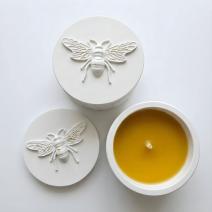
Bee Candle - White
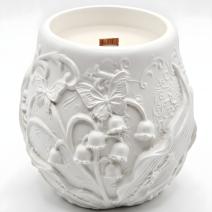
Convallaria Candle - White / Milk, Honey
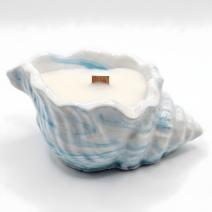
Candle Wave - Blue / Vanilla
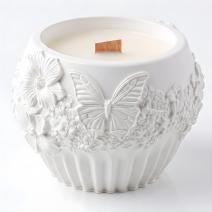
Candle Meadow - White / Cherry, Almond
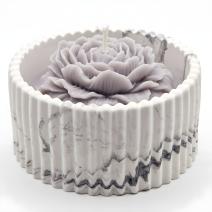
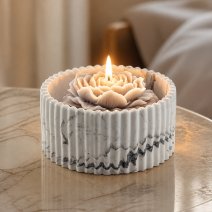
Carrara Candle - Peony / White / Silver / Lime, Mango
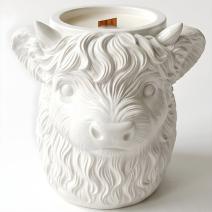
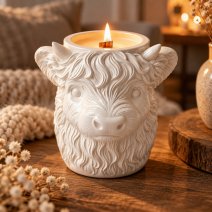
Highland Cow Candle - White / Vanilla
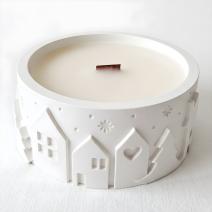
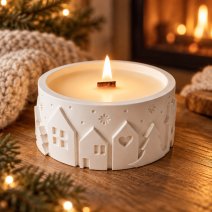
Winter Landscape Candle - White / Milk, Honey
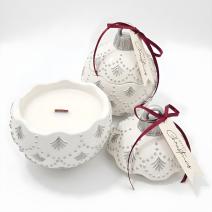
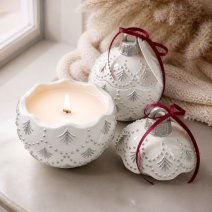
Christmas Bauble Enchanted Candle - White / Silver / Winter Magic
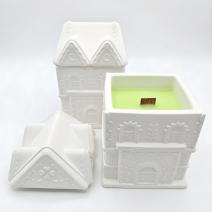
Medium House Candle - White / Apple, Cinnamon



Comments
Add comment
Login required
To add a comment, you must log in to your account.
Don't have an account? Register